How Tall Should a Pickleball Court Fence Be?
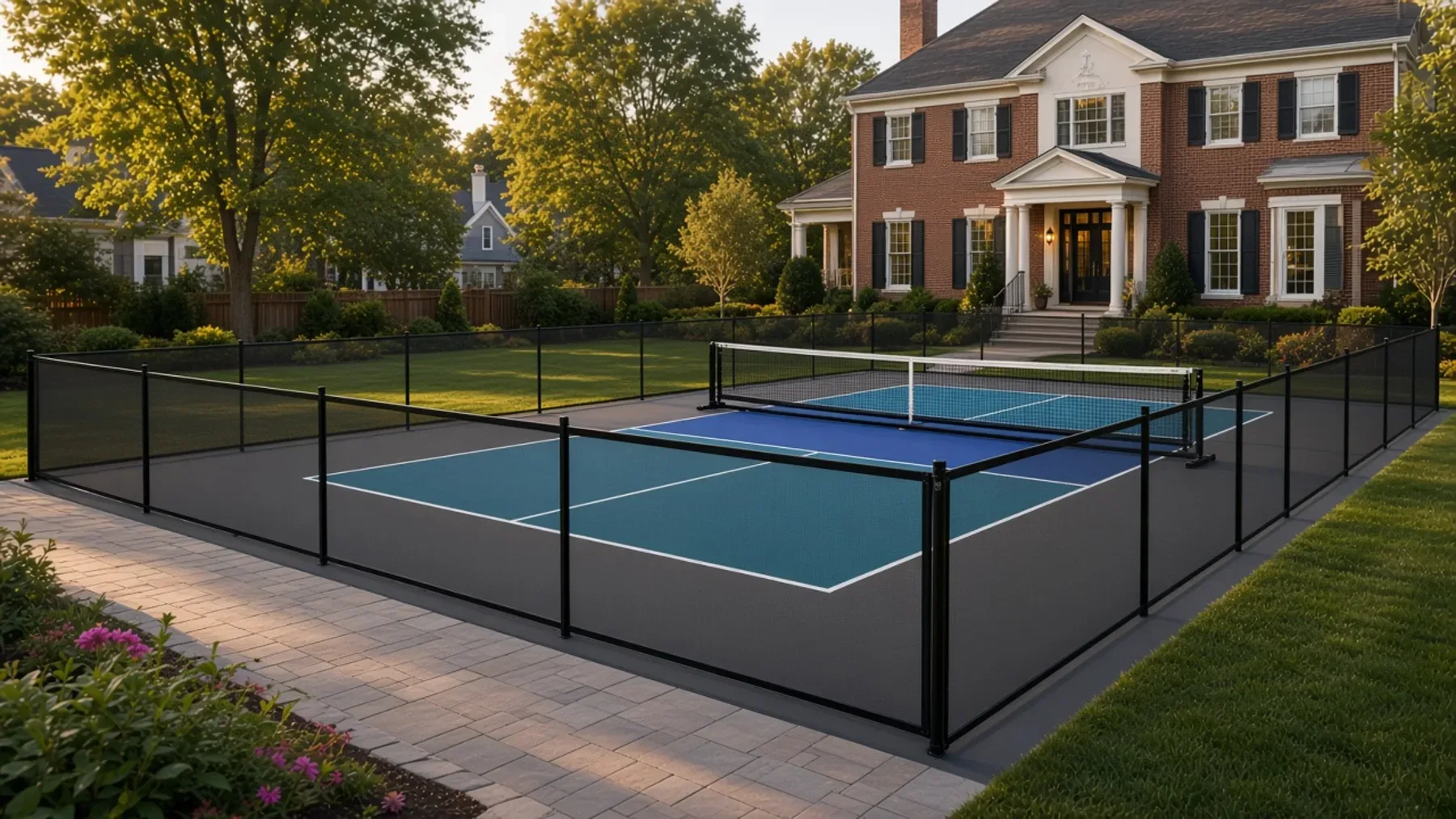
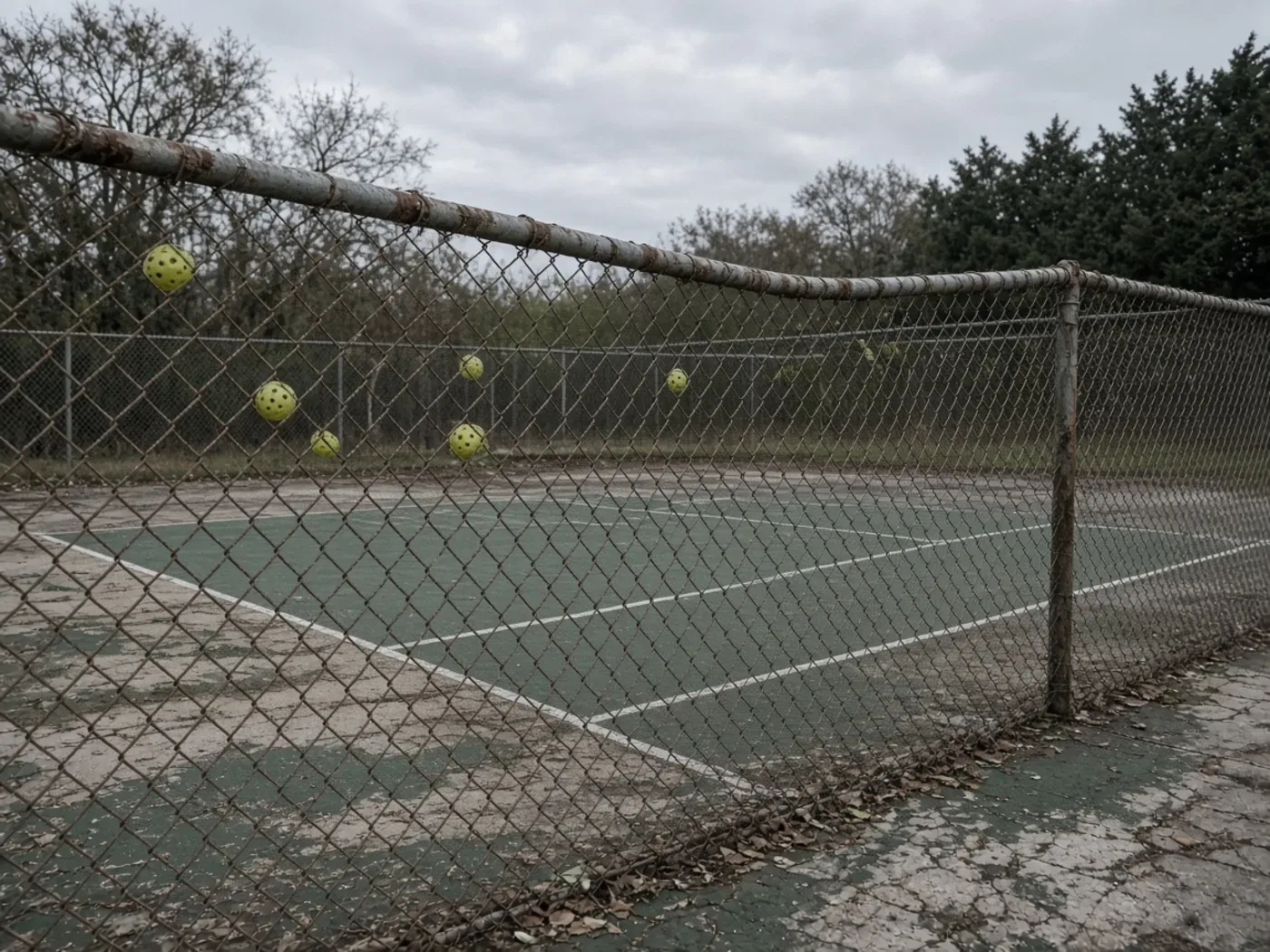
When people hear "pickleball fence" they picture the ten-foot chain-link cage around a tennis court. Most pickleball courts need nothing like that, and building one costs you the thing that makes a court pleasant to own: the view.
What the fence actually has to do
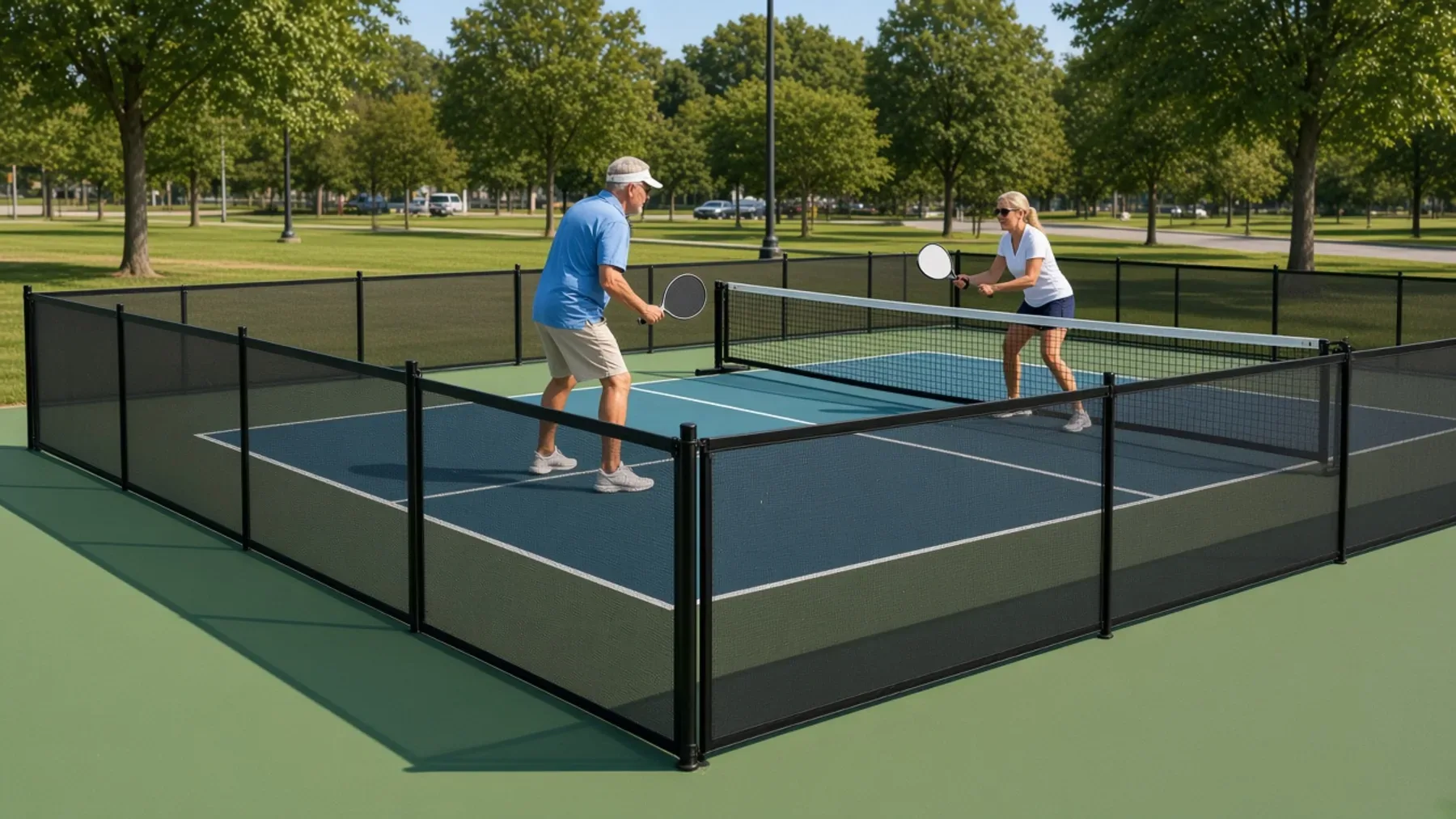
A pickleball is light and most of the balls that leave a court do it low: a mis-hit that skips, a dink that rolls, a serve that bounces and keeps going. The job of the fence is to stop those balls rolling onto the next court, into the landscaping or toward a pool or parking lot, and to define the court so play is not interrupted. Play pickleball, not fetch. A low mesh barrier does that job completely while everyone on the patio still sees the game.
When to go taller
Some sites do call for more. If the baseline backs onto a road, a pond, a neighbour's windows or a steep drop, a taller run behind that baseline earns its keep. Clubs sometimes want taller dividers between tournament courts. The Pickleball Fence is available in customizable heights, so we can run taller where it matters and low everywhere else.
Sightlines matter more than lobs
A lob that clears a four-foot fence is rare. A spectator who cannot see the far court through a ten-foot screen is guaranteed. On club courts, low dividers keep the complex from feeling like a row of cages and let members watch from the clubhouse.
Rules to check
Many townships treat court fencing like any other fence and cap height in side and rear yards, sometimes with a setback. HOAs often have their own rules. Because the mesh is low and see-through, it is usually approved far more easily than chain link or solid panels, but we still check before we quote.
Why mesh makes mixing heights easy
With chain link, stepping heights means separate runs with separate terminal posts and ugly transitions. With tensioned mesh, poles of different heights sit in identical sleeves and the top bar simply steps down, so a court can be taller behind a baseline and low on the sides without looking pieced together.
Request a free on-site consultation and we will recommend a height layout for your court.