Spectators can see
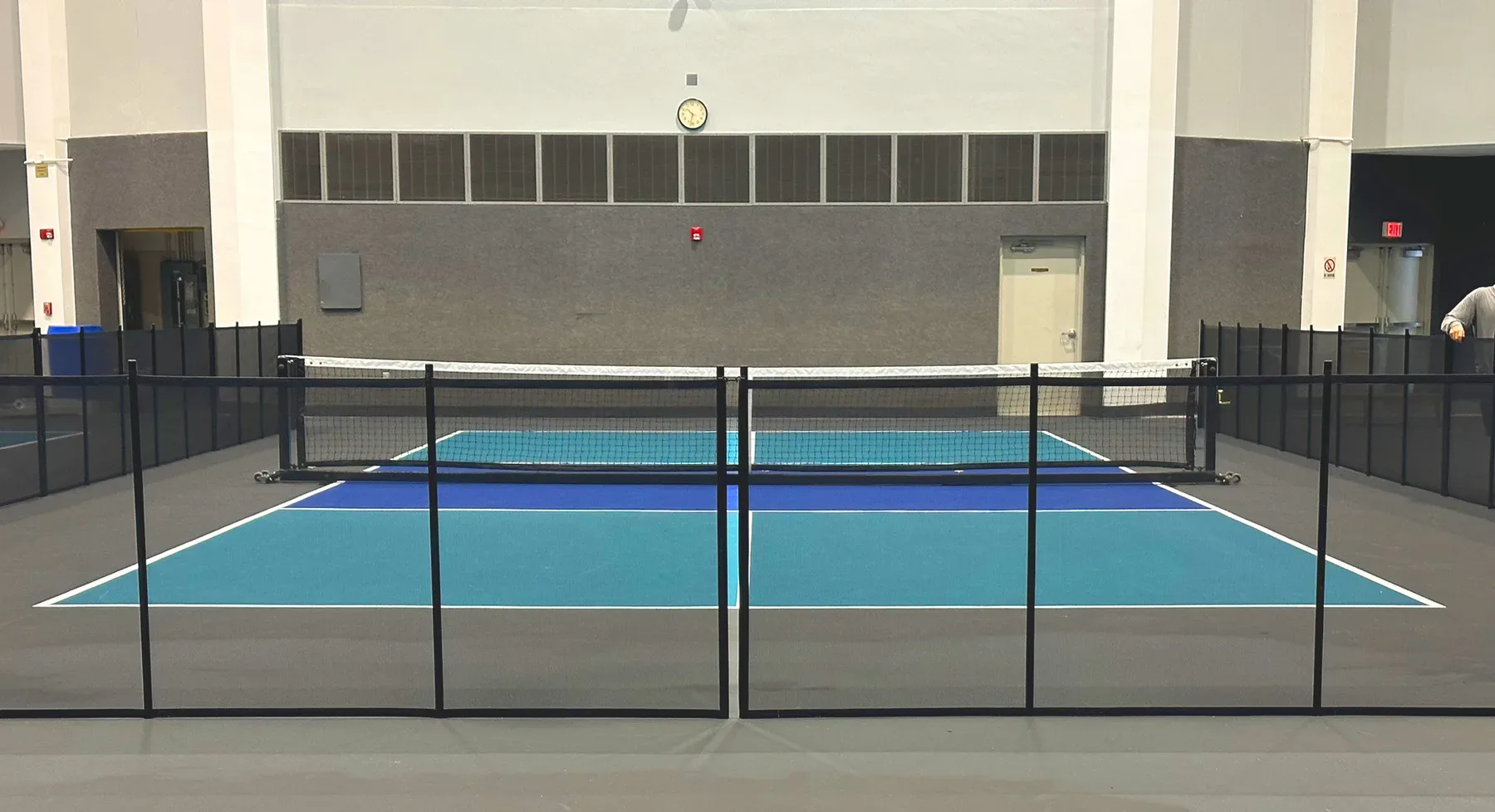
The fence is low and the weave reads nearly transparent, so the patio, clubhouse and bleachers watch the match, not the fence. Chain link diamonds and windscreens do not.
Why Tri-State Pickleball Fence
Chain link was never designed for a court. Here is what changes when you fence pickleball with a low, tensioned, see-through mesh barrier.
The old way
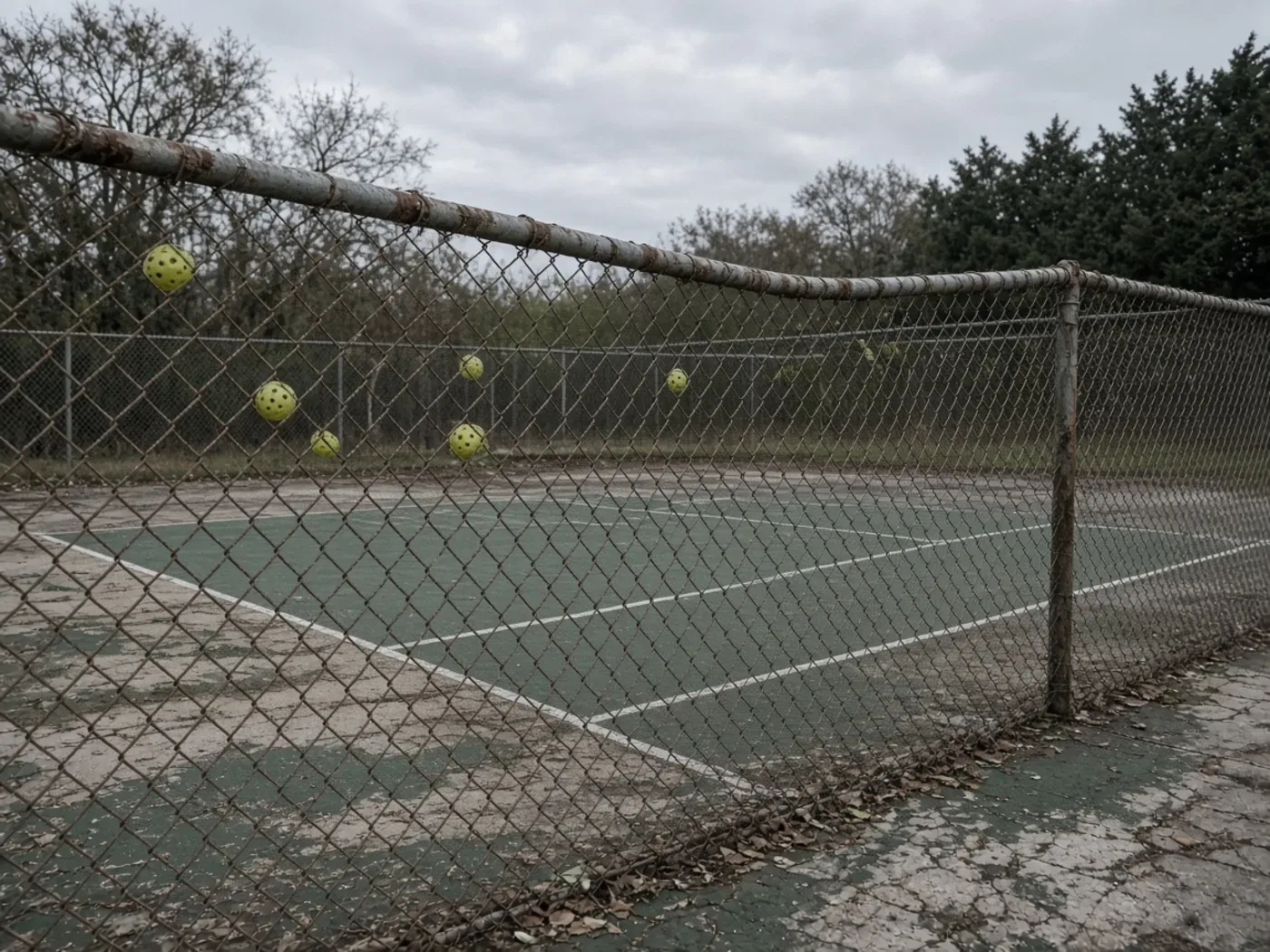
Galvanized chain link was designed for yards, not courts. It corrodes, it sags, balls wedge in the diamonds, and the heavy pattern turns spectators into squinters. It also stays put forever, even when you want the space back for a party or a resurfacing crew.
The Tri-State way
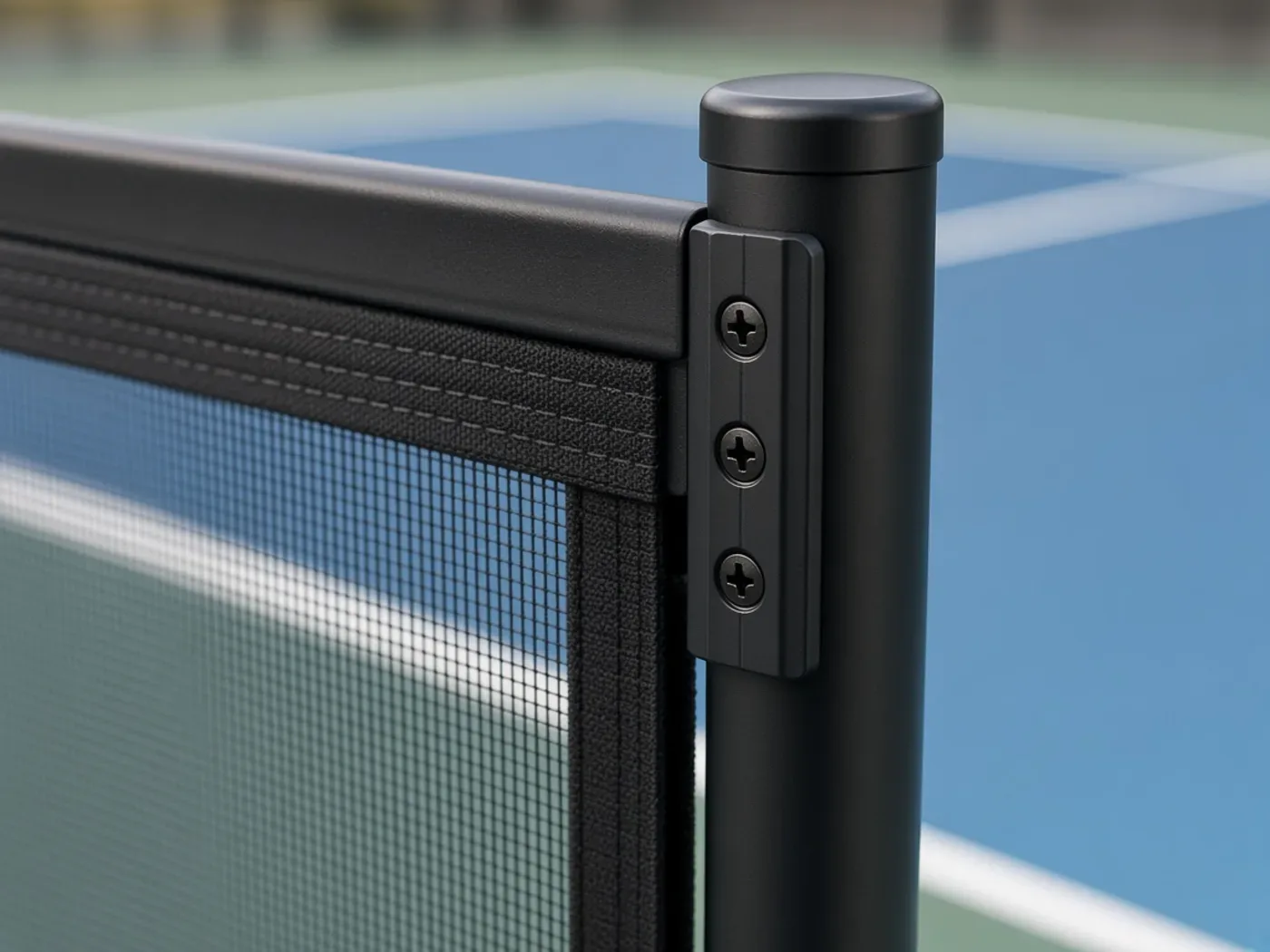
The Pickleball Fence is a slim mesh barrier with solid-core poles about three feet apart and a clean bar across the top. It is tall enough to stop balls rolling onto the next court or into the landscaping, and low enough that everyone can see the game. The mesh handles over 100 pounds of force, is rated at 270+ pounds per square inch, will not rot, warp or fade, and takes up to 30% of the wind out of the court.
When you need the space, the sections lift out of their sleeves.
The fence is low and the weave reads nearly transparent, so the patio, clubhouse and bleachers watch the match, not the fence. Chain link diamonds and windscreens do not.
Up to 30% wind reduction keeps the ball honest, but air still passes through, so poles are not fighting a solid screen in a storm.
Solid-core poles and mesh rated to handle over 100 lb of force. Balls and paddles bounce; the fence does not dent, stretch or rattle.
Fade-resistant mesh that will not rot or warp. Poles are solid-core, not hollow galvanized tube that corrodes from the inside.
Resurfacing, tournaments, parties, winter: lift the sections out and cap the sleeves. Chain link is forever.
Inset caps, recessed screws and smooth poles. No twisted wire ends at the top rail, no sharp cut edges at the gate.
Built to endure. The same solid-core poles and high-strength mesh that Life Saver has put around swimming pools since 1987, engineered for courts that get played every day and left out all year.
Proven around pools first
Life Saver Pool Fence has protected backyard pools since 1987, where the fence has to be climb-resistant, see-through and strong enough to stop a running child. The Pickleball Fence uses the same mesh, solid-core poles and hardware, laid out for the court. That is why it is the fence we trust on our own courts.
Tri-State Pickleball Fence is run by the same local team behind Life Saver Pool Fence of New Jersey.
A few of the questions we hear most. See the full FAQ for more.
Yes. Mesh fencing provides excellent visibility while maintaining a boundary. The fine weave reads nearly transparent from a few feet away, and because the fence is low, patios, clubhouses and the kitchen window all keep their view of the court.
Yes. The fence is engineered to reduce wind impact by up to 30% while remaining see-through and air-permeable. Your court stays playable year-round without the "sail" effect of a solid windscreen.
Yes. The fence is designed for easy removal. Each section lifts out of its sleeves, no tools required, and rolls up for storage. This flexibility is especially useful for temporary installations, resurfacing, tournaments and events, or when you need extra space around the court.
Life Saver Pool Fence offers a 100-year warranty on its pool fences, and similar guarantees apply to the pickleball fence, ensuring long-lasting durability and performance. We walk through the full terms at your consultation and provide them in writing.
Receive a FREE, no-risk pickleball fence consultation anywhere in New Jersey, Eastern Pennsylvania and the New York metro area. Call (732) 392-7099 or send the form.